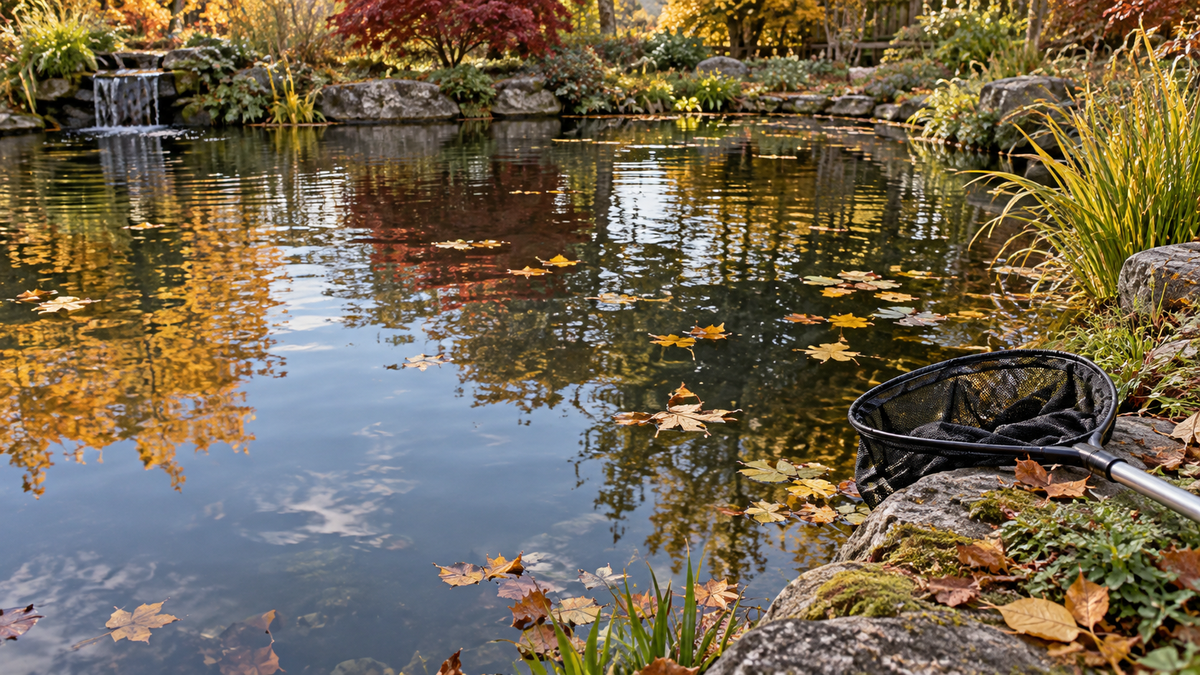
To prepare for a cleaner winter, the most effective approach is to collect leaves before they accumulate in hard-to-maintain areas. A few leaves are part of life in a garden. However, a heavy fall into a stocked pond deserves an organized approach: interception, collection, basket checks, and monitoring deposits.
Autumn maintenance does not mean removing all life from the pond. It aims to limit excessive input while maintaining a balanced environment. Aquipond solutions can complement organic load management when their conditions of use are met. They complement this preventive work without replacing the collection of accessible leaves.
Identify trees and leaf fall paths
Before the busiest period, observe nearby trees and where the wind usually blows leaves. A large part of the input may concentrate on one bank or in a corner. This observation helps position collection methods and plan practical access.
Also look at what falls from the ground. Leaves fallen on a patio can reach the pond several days later with the wind or rain. Collecting debris around the pond is therefore part of prevention, especially if a slope or path directs debris toward the water.
The timing depends on tree species, the region, and the conditions of the year. In Portugal, Belgium, or southern France, do not assume that the weeks of leaf fall will be identical. Local observation helps you intervene at the right time without installing too early a device that has become useless elsewhere.
Decide if a net provides a real benefit
A net can make collection easier when there is a heavy leaf fall. Its usefulness depends on the shape of the pond, access, vegetation, and the ability to monitor it. It must be installed so that it catches leaves without sagging under their weight in the water.
Choose a suitable device and follow its fastening recommendations. Check that it does not create a danger for animals or people. Improper mesh size, tension, and placement can lead to entanglement risks. A leaf protection net should never be considered a safety device for children.
Plan how to remove the load without dumping it back into the pond. A net that is inaccessible in the center or too heavy once wet becomes difficult to manage. The frequency of checks should follow the inputs and wind events, with an additional inspection after severe weather.
Collect leaves without stirring up the entire bottom
When leaves are still floating, gentle collection is generally easier than when they are wedged between stones. Work from a secure support and use a tool suited to the required reach. Avoid leaning excessively over a wet bank or moving unstable elements.
In shallow areas, remove accessible piles without systematically scraping all supports. Organisms may be found among the leaves and plants. Inspect the removed materials and adapt the method to limit unnecessary wildlife removal.
If a large quantity has already reached the bottom, prepare a targeted intervention. Stirring up the entire deposit to make it more visible can complicate collection and cloud the water. In a deep or hard-to-access pond, ask for advice on the method rather than attempting an improvised operation.
Check baskets and water passages more often
The fall period can quickly change the load received by a skimmer or screen. A weekly check sufficient in summer may become inadequate during a massive input. Observe the filling speed and adjust the frequency to what you actually see.
A full basket sometimes limits circulation at the time when the pond needs to recover more materials. Check the levels and water return, then remove the waste according to the equipment procedure. The goal is to maintain proper flow without unnecessarily multiplying interventions on the biological supports.
Dispose of leaves in an area where they will not blow back at the first gust of wind. Keep cleaning waste away from the outflows leading to the pond. This organization seems simple, but it avoids repeating the collection of the same materials several times.
Tell the difference between a few leaves and an overload
A living pond naturally welcomes debris and organisms that use it. The need for intervention depends on use, population, volume, and collection capacity. The goal is not to pursue every isolated fragment, but to avoid an accumulation that exceeds what the installation can manage.
Decomposing organic materials contribute to the oxygen demand. Their importance must be assessed with the pond's operation and current conditions. Monitor the fish, circulation, and relevant analyses if the load has increased significantly or if a change in behavior appears.
Dark water does not indicate an emergency on its own, just as clear water does not guarantee the absence of a problem. Distinguish coloration, the presence of particles, and measured parameters. This reading avoids applying a product solely to restore an aesthetic hue without understanding the state of the environment.
Organize plant maintenance around leaf fall
Aquatic plants can also provide dead parts. Remove those that are accessible and whose removal is appropriate for the plant and the season. Avoid a uniform cut of all areas without considering their role as habitat and their maintenance needs.
In a very dense area, a gradual intervention sometimes allows for the preservation of refuges while improving access and circulation. For a pond oriented toward wildlife, the recommendations differ from those of a pond heavily stocked with fish. Define the use before choosing the intensity of the work.
Do not transport debris, sludge, or plants between bodies of water to "reseed" a pond without control. These transfers can move unwanted organisms or diseases. A well-prepared local maintenance is better than an input whose origin and consequences are unknown.
Liquid Bactovase in an autumn program
Aquipond Liquid Bactovase can be considered to accompany the management of deposits containing an organic fraction, depending on its intended use. It comes after the identification of inputs and the organization of the removal of accessible leaves. Its role should not serve as a justification for deliberately allowing piles to form.
Check the water temperature and the current instructions. A presentation oriented toward autumn and winter does not mean that the conditions are always suitable, in every pond and at every moment. Have the program confirmed if the water is particularly cold or if the configuration falls outside the usual framework of use.
Distinguish leaves from mineral materials carried by the rain. The product does not make sand or clay disappear. If the deposits also come from an eroded bank, the program must include a correction of this input and an appropriate collection of materials.
Bacto Maintenance for monitored organic load
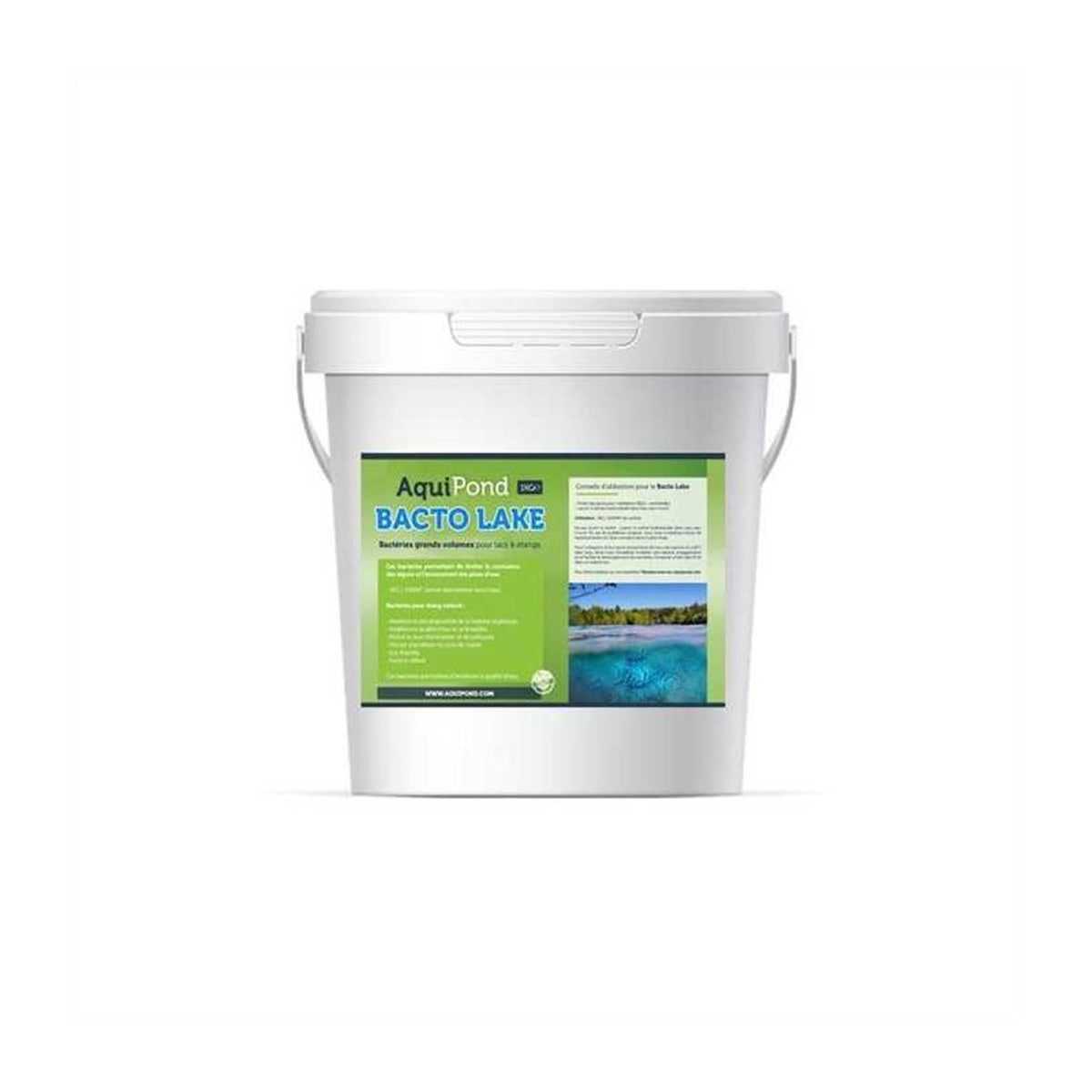
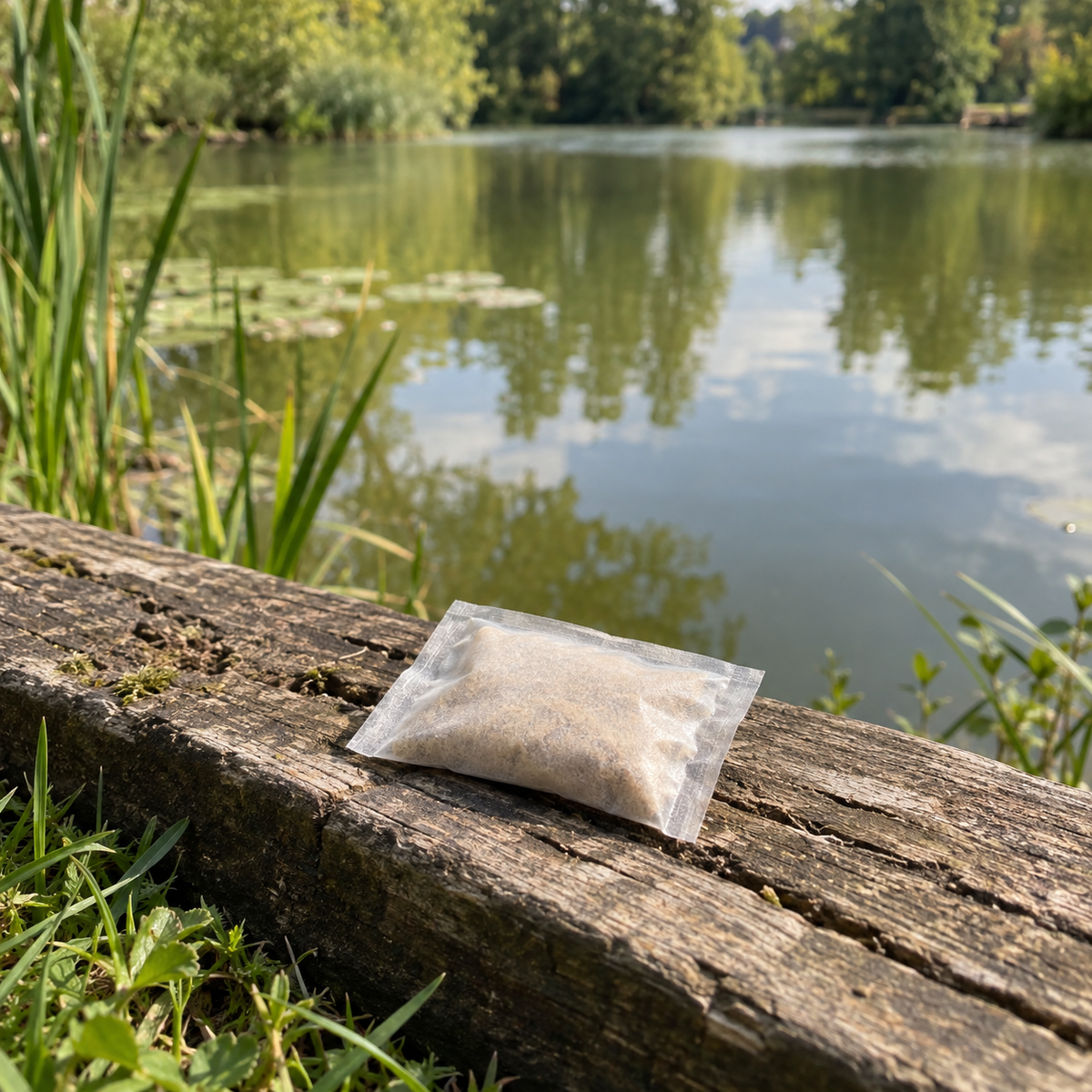
Aquipond Bacto Maintenance is to be examined in an organic load maintenance organization when its conditions of use are met. The choice depends on the state of the pond and the interventions already planned. It is not an automatic application triggered by the month of October.
The instructions define the appropriate parameters and temperature. Measure the water and check the operation of the installation before building the schedule. A pond still active in a mild region and a pond entering a cold period may require different decisions.
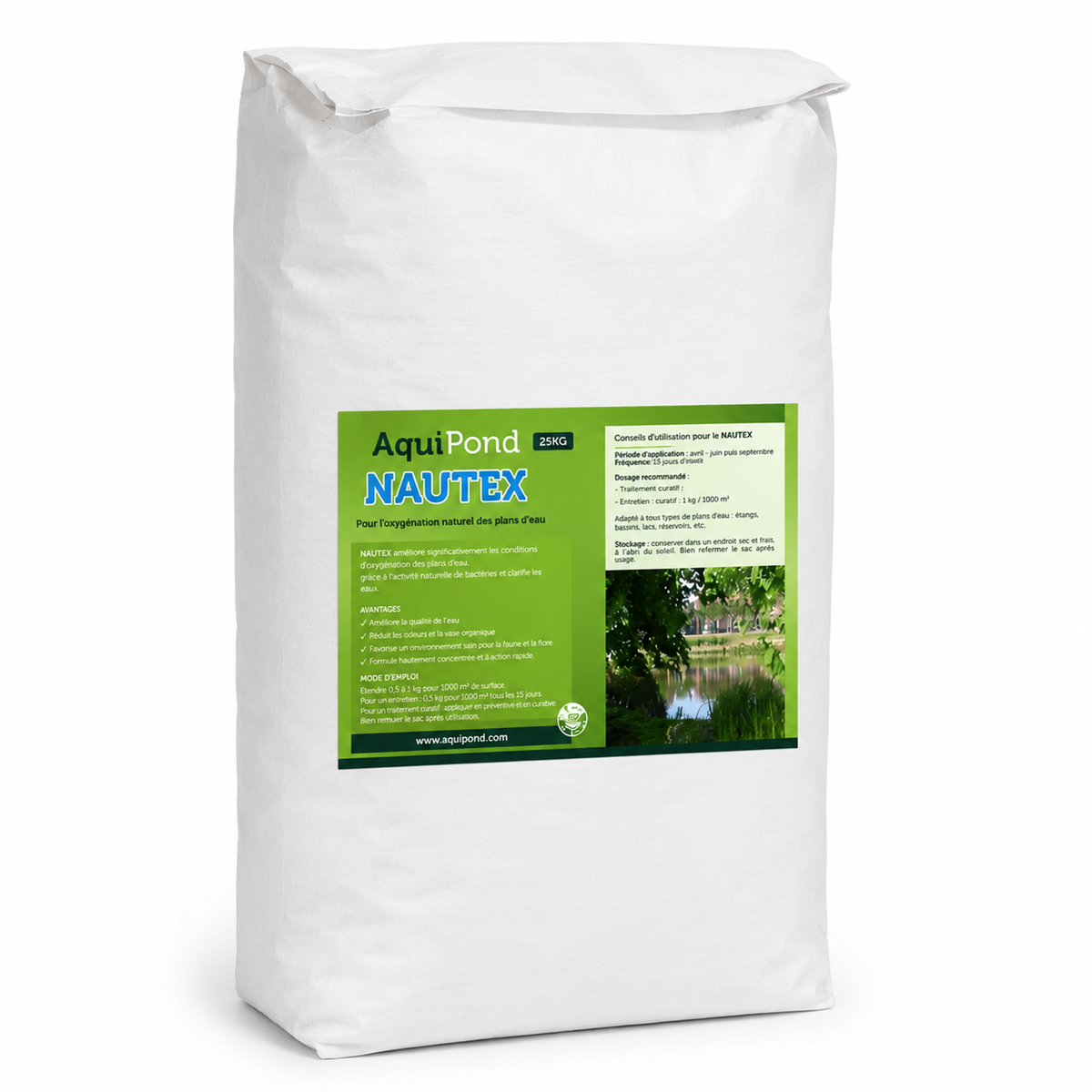
If several Aquipond solutions are considered, confirm their respective usefulness and their order. Buying several references does not automatically provide a better result. A function identified for each intervention makes the program easier to follow, especially when several people participate in the maintenance of the garden.
A schedule based on garden events
| Event | Priority check | Action to prepare |
|---|---|---|
| Start of heavy fall | Leaf path and access | Install or adjust collection |
| Strong wind | Net and basket load | Remove piles and check fastenings |
| Intense rain | Soil and leaf inputs | Identify outflows and collect debris |
| Sustained temperature drop | Instructions conditions and pond activity | Revise the maintenance program |
| End of fall | Remaining materials and storage | Clean then store unused devices |
This schedule is easier to transpose from one region to another than a list of fixed dates. It also allows simple checks to be entrusted to someone on site: photograph the baskets, record the temperature, and report an arrival of soil after rain.
Before winter, check:
- Nearby trees and the bank receiving leaves are identified.
- The net is tight, fastened, and does not touch the water.
- The baskets are emptied after every gust of wind.
- Removed leaves are stored away from outflows toward the pond.
- The water temperature is recorded and instructions reread.
- At the end of fall, the net is cleaned and stored.
Frequently asked questions about leaves in the pond
Should all leaves be removed as soon as they touch the water?
A few leaves do not require a permanent reaction. The issue is the quantity, its accumulation, and the pond's ability to manage it. Regular collection during heavy falls avoids more difficult work when large piles have settled on the bottom.
Does a biological product allow you to do without a net?
The two serve different functions. The net intercepts material before its arrival or immersion, while a product is used under specific conditions for an identified need. The choice of protection depends on the garden, not on an assumed equivalence between these means.
Can the net be left all year?
Check its usefulness and the device recommendations. A net left unnecessarily always requires monitoring and can hinder access or wildlife. When the period of use ends, store it properly rather than leaving it loose near the water.
For a better-prepared winter: intercept major inputs, keep water passages clear, and adapt applications to measurements. Aquipond solutions can complement maintenance whose causes and objectives are clearly identified.
Read also
- Organic sludge or mineral deposit: choose the right action
- How does sludge develop in my pond?
- Filter stopped: how to prepare the restart?
Unsure about your pond? Leaves already at the bottom, smelly water or less active fish: describe your pond, we will guide you to the right action.
Free diagnosisSend a photo to an expertTechnical sources and references
- Royal Horticultural Society — autumn management of leaves and debris.
- Royal Horticultural Society — storing nets and preventing transfers between ponds.
- Aquipond Bactovase Liquid and Bacto Maintenance data sheets, consulted on October 10, 2026. Check the terms of use on the current instructions.