
After the filter stops, restarting it must take into account what happened in the circuit. A brief outage, a prolonged failure with stagnant water, and a prepared seasonal shutdown all require different interventions. Before restarting circulation, check the equipment, the condition of the compartments, and the fish.
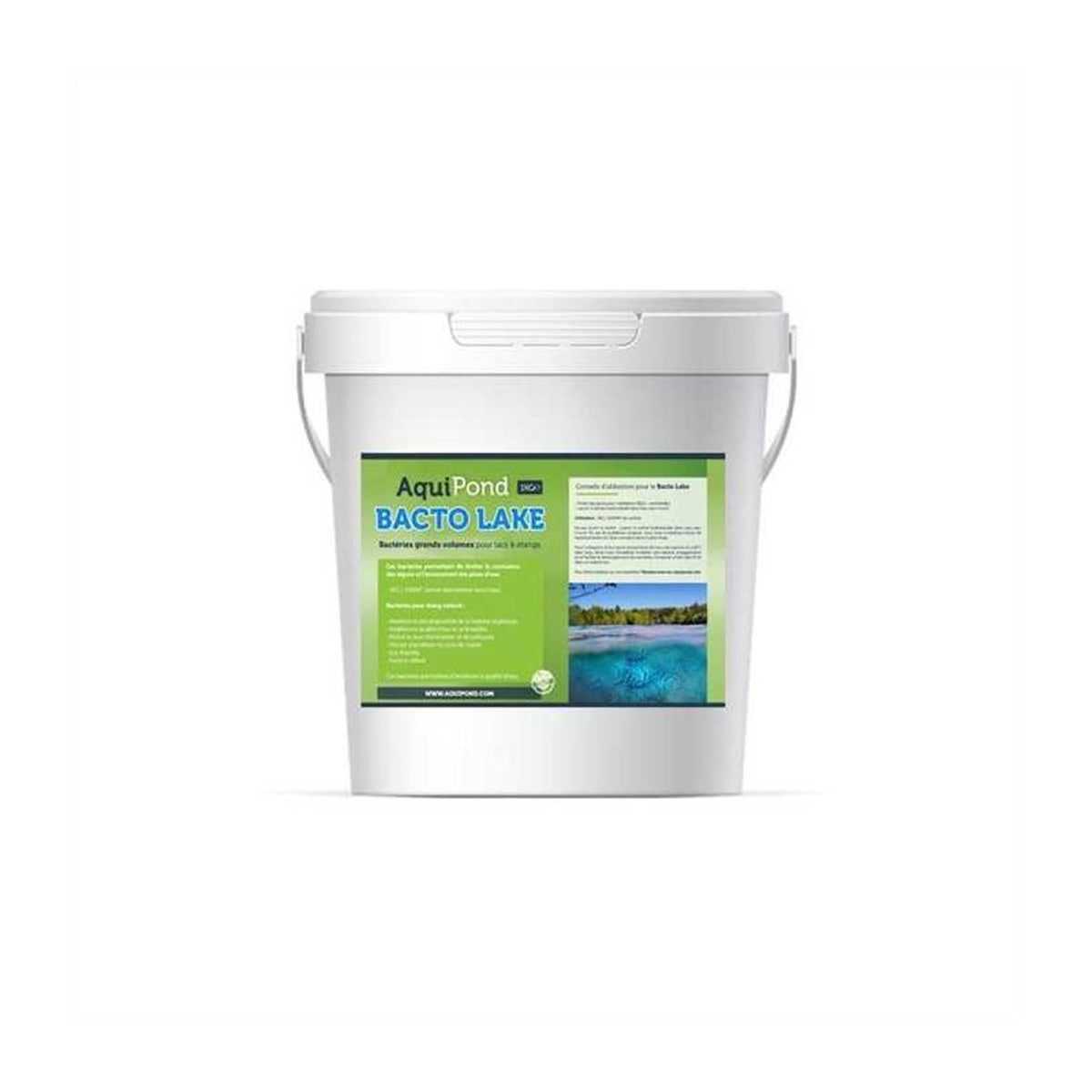
The goal is to restore proper hydraulic operation, then follow the biological capacity of the system. Aquipond NitriBoost and Bacto Maintenance can be used as needed and according to their instructions. They are part of an organized restart; they do not replace troubleshooting the fault or checking the water.
Reconstruct the outage before touching the settings
Note the probable time of the outage and the last normal observation. Identify the stopped elements: circulation pump, aeration, mechanical filtration, or the entire circuit. A stopped pump with independent aeration still active does not create exactly the same situation as a general outage.
Also specify the weather, the water temperature, and the pond's load. A heavily stocked system during the warm season may have less margin than a lightly stocked pond in cooler conditions. There is therefore no universal number of hours after which all installations would be in the same biological state.
If the electrical cause is uncertain, if a socket has been wetted, or if a device has a fault, call in a qualified person. Do not reset a protection device multiple times without understanding why it trips. The restart of circulation must begin with equipment whose use is safe.
Observing the fish determines the priority of action
Look at their breathing, their position in the water, and their collective behavior. Fish seeking the surface or concentrating near an inlet may indicate an urgent problem, without identifying the cause on their own. Immediately check the aeration and ask for competent help if the condition is abnormal.
Suspend feeding while assessing a concerning situation. Introducing a regular ration into a system whose capacity is uncertain adds an avoidable load. The restart must be adapted to the condition of the fish, the temperature, and the monitoring results, with particular advice when the situation has been severe.
Prepare oxygen tests if the appropriate equipment is available, as well as nitrogen parameters, pH, and temperature. Clear water does not allow you to conclude that the outage had no consequences. The pond volume and the list of species will also help interpret the results.
Inspect the filter and pipes before restarting
Consult your equipment's procedure for opening, purging, and restarting. After an outage, some compartments may contain accumulated materials and water whose condition differs from that of the pond. Do not automatically return all their contents to the fish without this check.
Check the baskets, screens, and water passages. An obstruction may be the initial cause or may have aggravated the problem. Also check the valves and fittings: an intervention during the outage may have changed their position. Photographing the normal configuration makes these checks easier during the next incident.
In the presence of suspicious stagnant water, significant deposits, or an abnormal odor, prepare the appropriate evacuation according to the system's instructions and ask for advice. Avoid violently stirring up accumulated materials to send them all at once into the pond. Cleaning must preserve what can be preserved while removing the relevant waste.
Clean what is blocked, preserve what works
A filter often has different functions. The mechanical parts retain waste; the biological media participate in the transformations of the water. Restarting does not systematically justify replacing or cleaning all materials. Choose the intervention according to their condition and the equipment's recommendations.
Remove the materials that prevent passage and check the proper installation of the media. Mispositioned elements can create a bypass: the pump works, but part of the water avoids the useful zone. Check the seals, housings, and intended operating levels.
If media have dried out, been replaced, or undergone a major intervention, consider the biological capacity as a piece of data to check. A clean appearance does not provide information about this capacity. The restart of circulation will be followed by appropriate analyses before restoring a normal operating load.
Restart the circuit in an observable manner
Follow the intended order for the valves, priming, and devices. Stay present to observe the levels, leaks, noises, and flow. An apparent return of water does not rule out partial priming loss, an air leak, or insufficient circulation. Compare with the installation's usual benchmarks.
Check that any displaced materials are recovered in the planned steps. A basket can fill up quickly during a restart. Therefore, allow the time necessary for this check rather than starting the pump just before leaving the premises for several days.
If the circuit does not return to normal operation, stop trying to improve it with products and have the equipment diagnosed. A biological reference cannot correct a clogged pipe or a poorly primed pump. Useful circulation is a condition of the program, not a result to expect from a bottle.
NitriBoost to support a justified biological recovery
Aquipond NitriBoost can be considered when the restart requires support for biological filtration. The choice depends on the history of the outage, the interventions carried out, and the measured parameters. Check the temperature, pH, and application conditions in the current instructions.
Calculate the quantity using the actual volume indicated for the intended use. Do not automatically double a dose because the outage lasted longer than expected. If the situation involves affected fish or concerning results, the protocol must be established with a competent person, taking into account the entire system.
Monitoring remains essential after application. The biological transformation of nitrogen is not a guarantee of the instantaneous neutralization of all compounds. Check ammonia and nitrites according to the situation, with tests and clearly identified units.
Bacto Maintenance after waste management
An outage may coincide with organic accumulation: uncollected leaves, waste in the compartments, or food remains. After removing accessible materials and restoring operation, Aquipond Bacto Maintenance can find its place in maintenance adapted to this load.
This function must remain distinct from circuit repair and nitrogen monitoring. The product is not a substitute for emptying a filter full of waste. Its use follows its own conditions and must be compatible with the other interventions planned during the restart.
If you are considering several products, prepare a readable schedule. Note what has been done and what still needs to be checked, with the intervals required by the instructions. An understandable program makes monitoring by another person easier and prevents a second application by mistake.
Three situations to adapt your decision
| Situation | Determining factor | Monitoring to prepare |
|---|---|---|
| Outage detected quickly, equipment intact | Check the fish and the normal return of the circuit | Observation and analyses according to the load |
| Outage of unknown duration, stagnant compartments | Inspect and manage their contents before returning to the pond | Supervised restart and reinforced monitoring |
| Seasonal shutdown with major cleaning | Re-evaluate the biological capacity and media | Gradual load restart, documented measurements |
These examples serve to organize the questions. They do not allow you to infer remotely that a filter is intact or completely lost. The actual condition depends on the conditions encountered. A good description of the outage allows you to choose the useful intervention without unnecessarily replacing the entire installation.
Avoid the next preventable failure
After the restart, look for the cause: neglected basket, protection fault, water level too low, pinched hose, or aging equipment. The corrections will be different. Keep a record of the incident and the repair, then check that the same trigger does not occur again during the next maintenance.
Prepare a simple sheet for absences. It must indicate the level benchmarks, the devices that must operate, the contacts, and the warning signs. A photo of the normal circuit and the valves can be more useful than a long technical description for the person in charge of a visual check.
The choice of a backup solution for circulation or aeration depends on the pond and its population. Size this response according to the electrical constraints and the installation. The goal is to maintain a margin in case of an incident, without improvising a connection or unsuitable equipment on the day of the failure.
The "absence" sheet to leave near the filter:
- The normal water level benchmarks.
- The list of devices that must run continuously.
- A photo of the circuit and the normal position of the valves.
- Warning signs: fish at the surface, stopped waterfall, full basket.
- Contacts to call in case of doubt.
Frequently asked questions after a filter stops
Do all bacteria disappear after a specific time?
An identical timeframe cannot be set for every installation. Water conditions, oxygen, temperature, media, and load influence their condition. The diagnosis is based on history, inspection, and monitoring of operation, not on a single hourly rule.
The pump restarts: can I consider the problem resolved?
Mechanical restart is an important step. It remains to check the water passages, levels, fish, and relevant analyses. Biological capacity is not read by the movement of the waterfall alone.
Should I feed to help the filter restart?
Do not distribute an extra ration in a stocked pond whose condition is uncertain. Load management and feeding must follow the actual situation and the recommendations received. A biological start is prepared with an appropriate protocol, without unnecessarily exposing the fish.
A successful restart relies on a functional circuit, a controlled load, and consistent measurements. Aquipond solutions can then support the recovery with a precise role, in a program you can follow and explain.
Also read
- Nitrites in a new pond: understand and act
- Clean filter, cloudy water: what to check in your pond?
- Leaves in the pond: prepare a cleaner winter
Unsure about your pond? Filter restarted but fish are distressed, changing water, or test results are difficult to interpret: describe the situation to us.
Get a free assessmentSend a photo to an expertTechnical sources and references
- Merck Veterinary Manual — maintenance and monitoring of aquatic systems.
- Penn State Extension — dissolved oxygen in ponds.
- Aquipond NitriBoost and Bacto Maintenance data sheets, consulted on October 10, 2026; restart procedure to be completed using the instructions for the filter concerned.