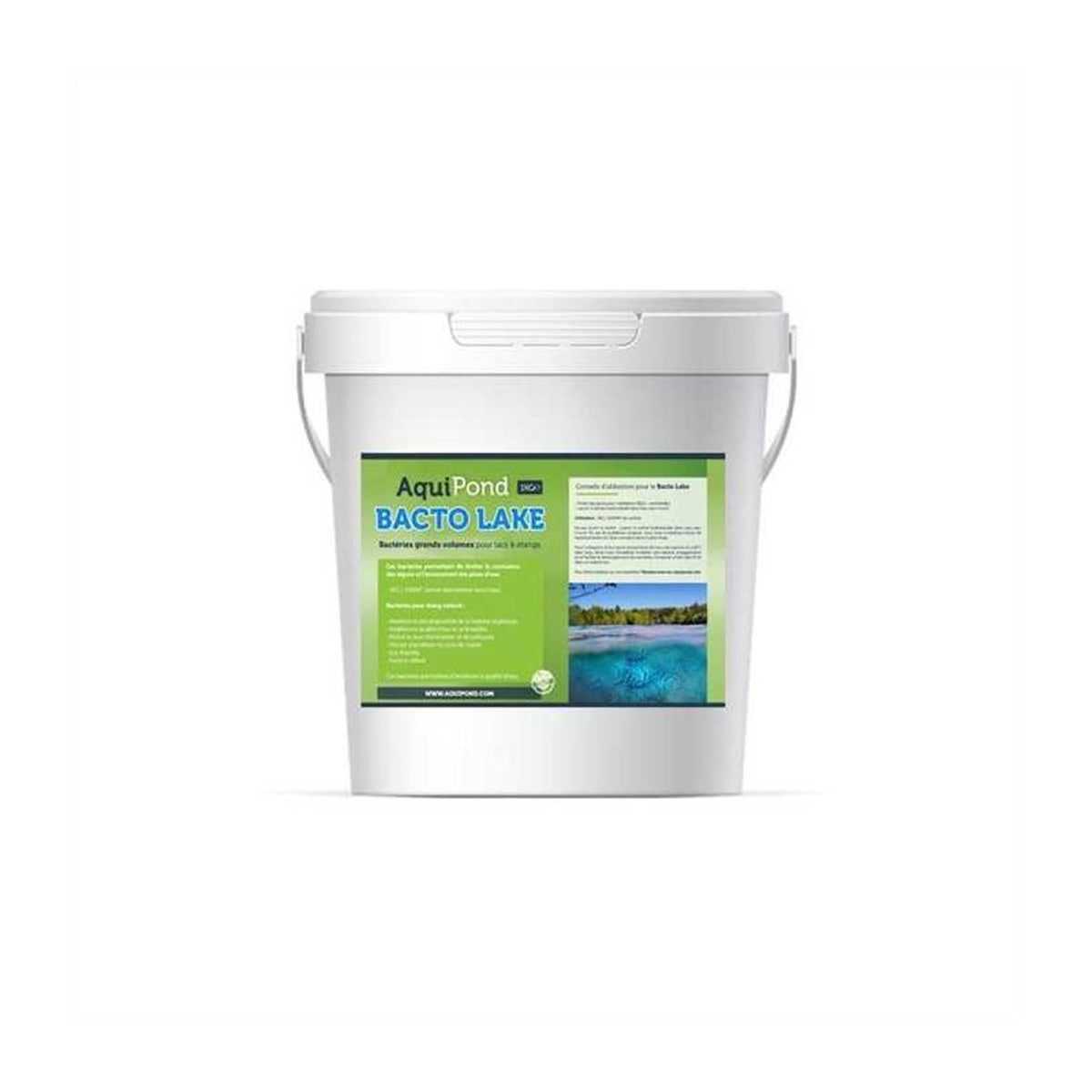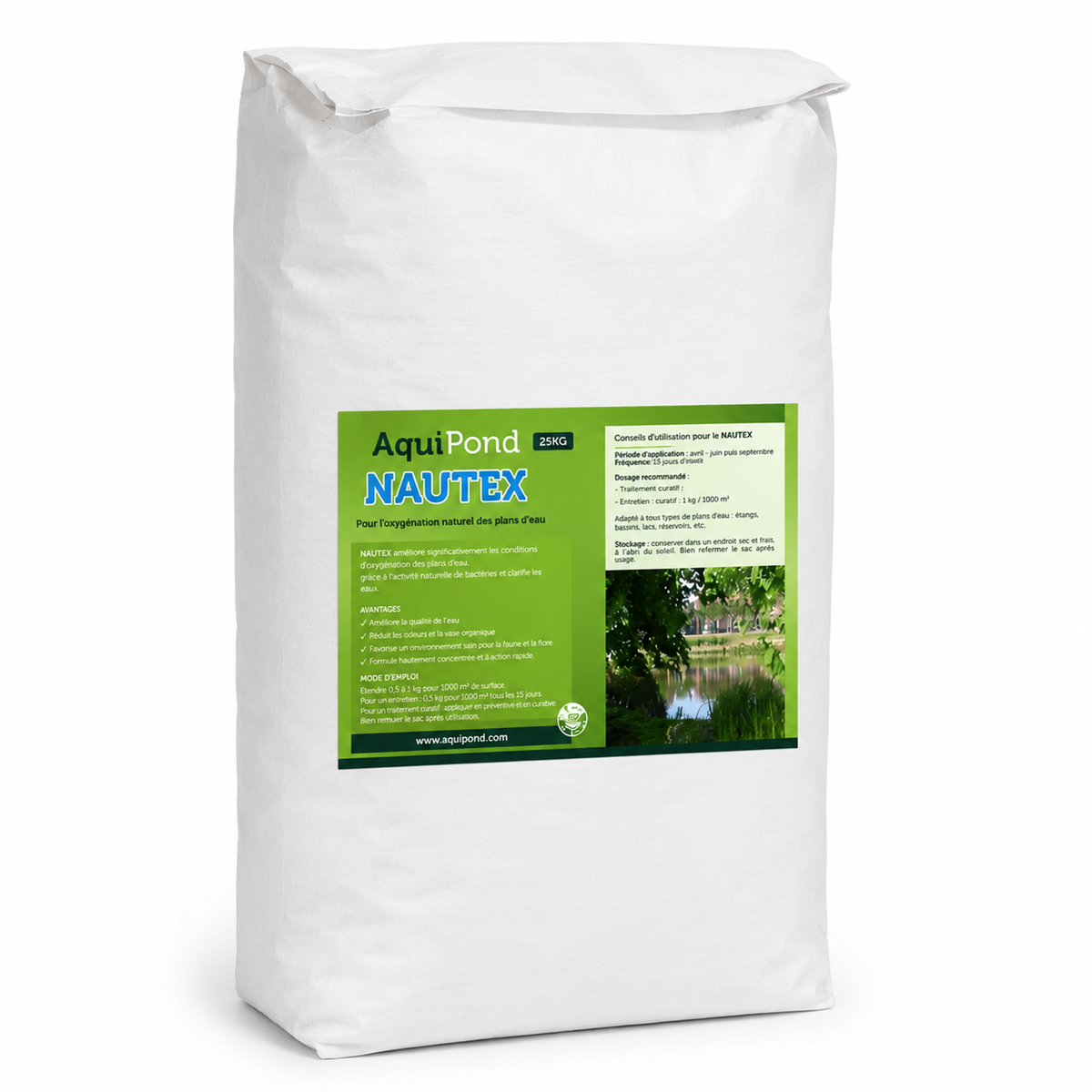

A pH that drops after rain, results that vary greatly from week to week, less active fish: these observations prompt you to check the balance of the water. But immediately raising the pH with the first product available is not necessarily the right answer. You need to know, in particular, whether the pond lacks buffering capacity, whether the result varies with the time of day, or whether a recent event has altered its operation.
Since 1998, Aquipond has been developing its approach to maintenance around the living pond. For a pH that is too low, the approach remains practical: confirm the measurements, identify the cause, calculate the volume concerned, and gradually correct the parameter that needs it. Here you will find the steps to choose between analysis, mineral supplementation, and adapting the maintenance.
pH, KH, and GH: three measurements not to be confused
pH describes the acidic or alkaline nature of the water. KH, or carbonate hardness in common pond language, serves as a benchmark for its buffering capacity. GH expresses total hardness, mainly linked to calcium and magnesium. These measurements provide complementary information. A satisfactory GH result does not prove that KH is sufficient to stabilize the water, and a pH measurement does not allow you to guess the two hardnesses.
To decide, look at all the results and their evolution. Water poor in buffering capacity can react more strongly to biological processes and external inputs. Conversely, correcting KH when it is already adapted can be useless. Always ask in what units the value is expressed: German degrees and milligrams per liter of calcium carbonate equivalent are not interchangeable numbers.
Do not look for a single pH for all ponds. The fish present, the materials, the water source, and the use of the pond determine the desirable conditions. An ecologically focused pond and a pond full of koi are not managed with the same objectives. In case of doubt, transmit the values and the species before choosing the correction.
Why can your pond's pH drop?
Several causes can accumulate. Very poorly mineralized make-up water and significant renewals after heavy rainfall can reduce KH. Biological filtration also plays a role: the transformation of ammonium by nitrification consumes alkalinity. In a stressed installation, the monitoring of buffering capacity should therefore not stop at the analysis carried out on the day of filling.
Carbon dioxide produced by respiration also influences the pH. This is one of the reasons why morning values can be lower than those at the end of the afternoon. A low pH measured only once at dawn is not enough to conclude that minerals need to be added. Examine the daily variation and the respiratory situation of the fish.
Finally, trace recent interventions: product added, work near the water, filter cleaning, runoff arrival, new supply source. A sudden drop in a previously stable pond deserves a precise search for the cause. Simply restoring the number does not guarantee that the origin of the problem has disappeared.
Check the measurement before treating
A test must be used with a clean test tube, the prescribed volume, and reagents in good condition. Respect the reaction time and the recommended lighting to read the color. If you use a pH meter, its calibration and the storage of the probe are part of the measurement. A precision displayed to the hundredth is not a guarantee of accuracy.
Take a sample at a representative location and note the time. If the condition of the animals allows, compare morning and late afternoon for a few days. Also record the temperature, the rains, and the water inputs. When two methods give incompatible results, check them before dosing. It is preferable to resolve this difference rather than calculate an intervention based on uncertain data.
The Sera Aqua-Test offered on Aquipond allows, according to its sheet, to monitor pH, KH, GH, and nitrites. This group of parameters is useful for an initial check. To expand the analysis to ammonia and other indicators, consult the water analysis kit for ponds. Choose according to the measurements you actually need.
When should you quickly ask for help?
A significant drop accompanied by lethargic fish, abnormal respiration, or mortality is not a matter of routine maintenance. Have the water checked and quickly seek advice from a specialist or a veterinarian competent in fish. pH can contribute to the problem without being the only cause. Oxygen, ammonia, nitrites, and temperature must be considered.
Check the pumps and aerators already installed. Avoid successive additions of several products as well as the brutal stirring of a silty bottom. Keep the packaging of the treatments used and indicate the quantities actually poured. This information is essential to propose a correction compatible with the situation and avoid a reaction between products.
KH is too low: what is Aquipond KH+ for?
Aquipond KH+ 2 kg is intended to increase the carbonate hardness of the water. It therefore responds to a need for remineralization identified by the analysis. The reasoning is not to pour a dose because the pH seems low, but to determine if the lack of buffering capacity contributes to the instability and what adjustment is suitable for the pond.
The sheet offers usage indications, but the measuring cup, the packaging, and the formulation must correspond to the product you have on hand. Follow its current instructions. Do not convert a measuring cup to grams at random and do not copy the dosage of another brand. For a major correction, have the steps and intermediate checks specified before application.
An increase in pH can change the proportion of free ammonia in the water. This is an additional reason to check ammonia when the pond is very populated, new, or unbalanced. If this presence is significant, the correction requires appropriate management; you must not try to quickly raise the parameters without taking into account the toxicity that can evolve.
GH and KH are low: adapt each addition
When both hardnesses require an adjustment, you must distinguish their needs. Aquipond GH+ 2 kg is intended to increase total hardness, while KH+ aims at carbonate hardness. The choice and articulation of these additions must be justified by the results, not by the idea that a pond would always benefit from receiving more minerals. Have an adapted program confirmed if several parameters require a correction.
Prepare a simple table: current value, unit, validated objective, planned product, and date of the next check. If only KH is a problem, it is not necessary to automatically change GH. The possibility of buying several solutions does not mean that you should combine or mix them. A readable maintenance makes monitoring easier and limits expenses without a precise objective.
Calculate the actual volume: a step often overlooked
Most doses intended for water depend on the volume to treat. The visible surface is not enough. For a simple shape, length multiplied by width multiplied by average depth gives an estimate in cubic meters, when the three measurements are in meters. One cubic meter corresponds to a thousand liters. Steps, sloped banks, and shallow areas must enter the estimation.
For example, a rectangular pond of four meters by three, with an average depth of one meter, represents about twelve cubic meters before correction for its particularities. A maximum depth of two meters should not be used instead of the average. This example only illustrates the calculation of the volume; it does not define any product dose.
For an irregular shape, mentally divide the pond into zones and add the estimated volumes. The meter reading during filling, when it exists, is particularly useful. Keep this data with the plan and the equipment references: it will serve for future analyses and maintenance interventions.
A correction protocol to make measurable
- Confirm pH, KH, GH, and temperature with adapted tests.
- Check nitrogenous parameters if the situation of the pond justifies it.
- Identify and estimate the volume actually concerned.
- Choose a product corresponding to the observed deficit.
- Apply the protocol of its instructions, with the steps validated for your case.
- Check again after the appropriate time and note the result before continuing.
Do not multiply corrections in the same day to pursue an exact result. The reaction of the water must be able to be observed and attributed to the intervention. Also keep a sample of the starting information in the form of photos of the tests and a small notebook. You will thus have a clear base to ask for an opinion if the answer is not the expected one.
Prevent the next drop rather than constantly starting over
If KH drops regularly, adapt the monitoring to the actual operation of the pond. Check it notably after major water changes and during periods when filtration and feeding are stressed. Analyze the make-up water: it can explain why the correction must be repeated. A pond does not necessarily receive the same quality of water all year.
Reduce the inputs of leaves and unnecessary food, maintain the filter according to its instructions, and keep a population consistent with the installation. A bacterial product does not replace an adapted buffering capacity. Conversely, minerals do not compensate for a pump failure or a lack of oxygen. The choice of products becomes simpler when each component has a precise role.
In a garden subject to long summers and irregular rains, organize the monitoring around real episodes rather than a calendar imported from another region. This applies in France and the Benelux as in Spain or Portugal. The climate influences maintenance, but it is the measurements of your water that must guide the dose and the frequency.
Your routine to avoid relapses:
- Measure KH after each heavy rain or each major renewal.
- Analyze once the make-up water you use (rain, network, well).
- Remove leaves and limit food to what the fish consume.
- Maintain the filter according to its instructions, without cleaning everything at the same time.
- Note each measurement and each addition in a notebook.
Frequently asked questions about pH that is too low
Is rainwater bad for a pond?
It is not automatically bad, but its low mineral input can count when the renewed volumes are large. Check the quality of the collection, the KH, and the GH of the pond. Water coming from a roof or runoff should not be assumed adapted without examining its origin.
Can construction lime be used?
Do not transpose construction products into a living pond. The forms of lime have different properties, and some are highly caustic. A product designed for the intended use, accompanied by instructions and a diagnosis, offers a more manageable approach than a recipe found out of context.
What should be bought first?
If you do not know your KH and GH, start by measuring them. Only then, consider KH+ for carbonate hardness or GH+ for total hardness. A well-chosen product is part of an ongoing monitoring process; it is not a substitute for understanding your water.
Read also
- pH too high in a pond: causes and solutions
- Pond GH and KH: what is the difference, which conditioner should you use?
- Filling a pond with rainwater: useful precautions
Technical sources and references
- Mississippi State University Extension: pH and Alkalinity.
- FAO: Improving Pond Water Quality.
- FAO: Fish Culture in Undrainable Ponds, monitoring the pond environment.
The functions of the products are based on the Aquipond product sheets linked in the article. Application dosages and conditions must be confirmed on the instructions of the product used.
Unsure about your body of water? A pH that drops every week, conflicting results, or less active fish: send us your measurements, and we will help you find the cause and the right correction.
Get a free diagnosisSend a photo to an expert