
In short: cyanobacteria, often called "blue-green algae," are photosynthetic bacteria that form blue-green scum or films on the surface of ponds, especially in warm weather and in calm, phosphorus-rich water. Some produce toxins that are dangerous to dogs, livestock, and humans. If in doubt, keep children and animals away, avoid any contact with the water, and then treat the bloom and, above all, its cause: phosphorus and sludge.
What are cyanobacteria?
Cyanobacteria are bacteria capable of photosynthesis, like plants. They are not algae in the biological sense: algae are eukaryotic organisms, while cyanobacteria are prokaryotic. The nickname "blue-green algae" comes from their blue pigment, phycocyanin, which often gives them a blue-green tint.
They occur naturally in almost all freshwater. The problem arises when they proliferate massively: this is known as a bloom. Many species have gas vesicles that make them float to the surface, where they accumulate as scum when the wind dies down. Common genera in ponds include Microcystis, Dolichospermum (formerly Anabaena), Aphanizomenon, and Planktothrix.
A bloom is almost always a symptom of eutrophication, which means an excessive enrichment of the water with nutrients (phosphorus and nitrogen), disrupting the entire ecosystem of the body of water.
How to recognize cyanobacteria in a pond?
Only a laboratory analysis can identify the species and measure the toxins. However, several visual signs should alert you:
- "Spilled paint" appearance: a smooth, sometimes thick layer floating on the surface and accumulating against the leeward bank.
- Color: blue-green, gray-green, bright "neon" green, sometimes brownish or reddish. As it dries on the edges, the film can turn turquoise blue or bluish-white.
- Cloudy water filled with small grains or green flakes in suspension, like pea soup.
- Odor: earthy or musty (due in particular to geosmin produced by certain strains), then distinctly nauseating when the bloom decomposes.
- Absence of filaments that can be grasped by hand, unlike filamentous algae.
The stick test: a clue, not proof
Dip a stick into the colored area, wearing gloves, then remove it. If green threads wind around it like hair, it is probably filamentous algae. If the stick comes out coated as if it had been dipped in paint, the presence of cyanobacteria is plausible. A second clue is to let a jar of collected water sit for a few hours: cyanobacteria tend to float to the top and form a green ring on the surface, while many green algae sink to the bottom. These two tests guide your decision; they do not replace an analysis.
| Characteristic | Cyanobacteria | Suspended green algae | Filamentous algae | Duckweed |
|---|---|---|---|---|
| Nature | Photosynthetic bacteria | Microscopic algae | Filamentous algae | Small floating plants |
| Appearance | Scum, paint-like film, blue-green | Uniform green water, "soup" | Cottony clumps, mats | Distinct small round leaves |
| Stick test | Coated stick, no threads | Stick wet with green | Threads clinging to the stick | Leaves stuck to the stick |
| Toxin risk | Possible, unpredictable | Low | Low | None known |
| Action to take | Secure first, then treat | Treat the cause (nutrients, light) | Remove, limit phosphorus | Remove, limit nutrients |
For other types of algae, see our guide on how to control algae in a pond.
Are cyanobacteria dangerous to dogs and humans?
Yes, potentially. Some strains produce cyanotoxins, which can attack the liver (microcystins, for example), the nervous system (anatoxins), or irritate the skin and mucous membranes. The key point: you cannot tell by the naked eye if a bloom is toxic. The same species can produce toxins one day and not the next. Therefore, every bloom should be considered dangerous until proven otherwise.
Why are dogs most exposed?
Dogs swim in the scum areas, drink the water, and then lick their fur where the cyanobacteria have accumulated. Their small size also makes a given dose more significant for their body. Possible symptoms sometimes appear quickly, in a few minutes to a few hours: vomiting, diarrhea, excessive salivation, weakness, tremors, breathing difficulties, convulsions. Livestock and horses that drink from an affected pond are exposed to the same risk.
What to do in case of exposure?
- Rinse the animal or person abundantly with clean water, wearing gloves for the dog's fur.
- Prevent the dog from licking before the rinsing is complete.
- Contact a veterinarian for an animal, or a doctor or poison control center for a person without delay, stating that there was contact with water suspected of containing cyanobacteria.
- If the body of water is public or frequented (municipal pond, swimming, fishing), report it to the health authorities: in France, the town hall and the Regional Health Agency (ARS); in Belgium, your municipality and the competent regional administration.
Why do cyanobacteria appear in my pond?
Blooms almost always result from a combination of factors:
- Heat and sunlight: most species grow better than green algae in warm water. Episodes occur especially in summer and early autumn.
- Calm water: without wind or current, the water stratifies (a warm layer on the surface, a cold layer at the bottom), and floating cyanobacteria benefit from the light on the surface.
- Phosphorus: it is the main fuel for blooms. It comes from fertilizers, runoff water, fallen leaves, fish food, and bird droppings.
- Sludge: organic sludge stores phosphorus. When the bottom lacks oxygen, this phosphorus is released back into the water, which perpetuates the problem even if you have reduced external inputs.
- Low dissolved oxygen: dissolved oxygen is the amount of oxygen present in the water. An oxygen-depleted bottom accelerates this release and promotes fermentation.
Some cyanobacteria can also fix nitrogen from the air, which gives them an advantage in waters rich in phosphorus but poor in nitrogen. This is why controlling phosphorus is a priority.
How to eliminate cyanobacteria from a pond?
The plan of action takes place in two steps: secure and reduce the bloom, then eliminate the conditions that caused it. Treating only the symptom leads to relapses every summer.
- Secure the body of water. Prohibit swimming, keep dogs and children away, stop livestock from drinking, and do not use this water to water a vegetable garden. Report the danger with a sign if the pond is accessible to the public.
- Do not stir the bloom violently without advice. Pumping the scum, spraying it with a jet, or stirring it exposes you to contact and aerosols. Also avoid algaecides that violently burst the cells: massive destruction releases toxins into the water. If you remove scum, do so with gloves and goggles and keep it away from any watercourse.
- Treat the bloom with active oxygen. Cyanobacteria are generally more sensitive to active oxygen than green algae and plants. CyanoClear by OASE is formulated for affected ponds: one 25 kg bucket treats up to 333 m² according to OASE. Strictly follow the instructions for use and maintain the access ban during and after treatment, as toxins can persist in the water for some time.
- Block the phosphorus. A phosphorus sensor like SeDox Max by OASE works in the water and in the sludge, at a rate of about 5 kg per 100 m³. Calculate the volume: surface (m²) × average depth (m). A 200 m² pond with an average depth of 1 m represents 200 m³, or about 10 kg.
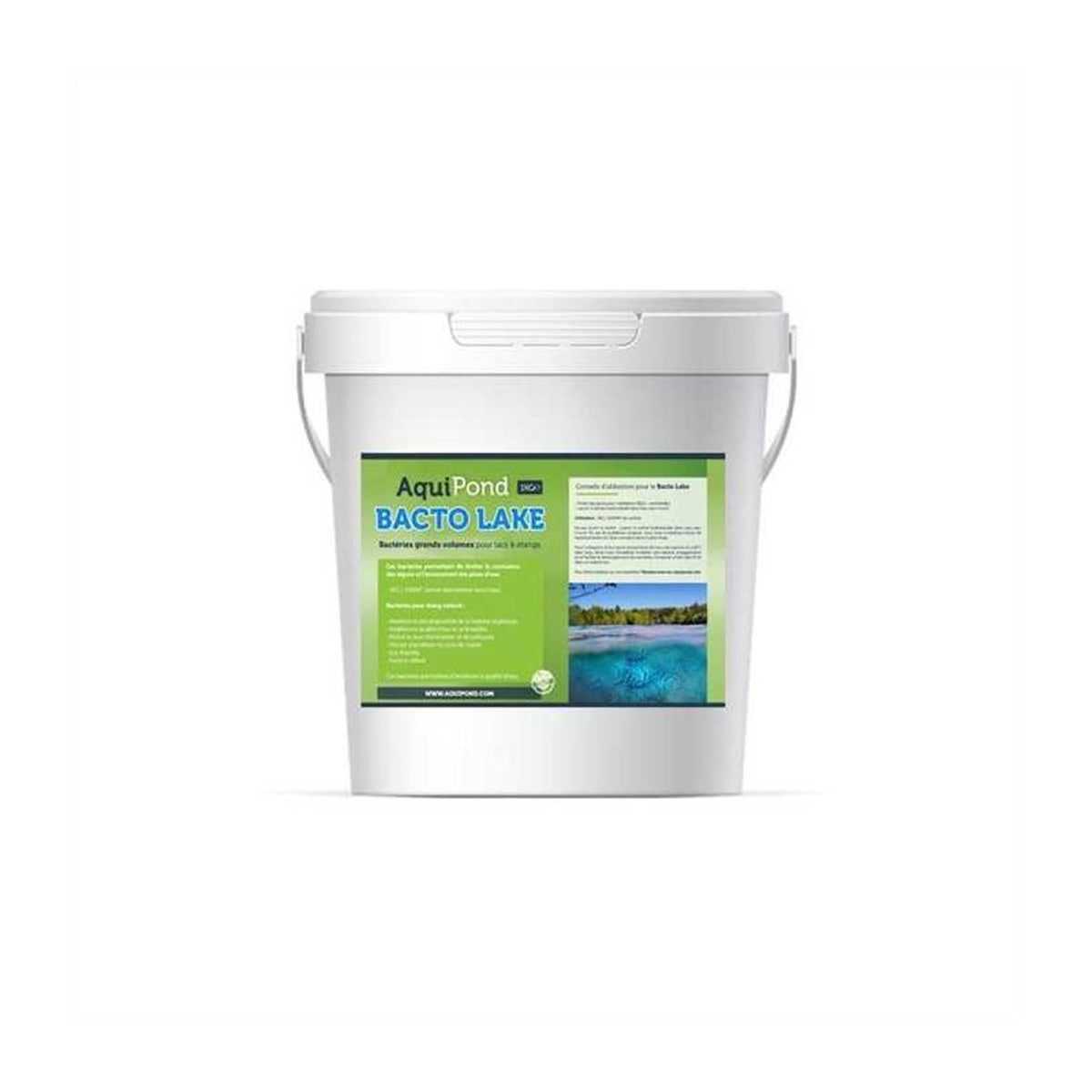
- Reduce the sludge. The bacteria in Bactovase break down organic sludge: 100 g/m² for maintenance, 150 to 200 g/m² for a heavily sludged pond, in two applications per year (spring and autumn). In natural ponds, the bacteria in Bacto Lake maintain clear water (100 g per 100 m², 1 kg per 1,000 m²).
- Aerate. An aeration system suitable for natural ponds breaks stratification, oxygenates the bottom, and limits the release of phosphorus from the sludge. See our guide for choosing the right aerator.
Non-chemical approaches still have their place: remove fallen leaves, plant aquatic plants that consume nutrients, create a vegetated buffer zone to filter runoff. On a large body of water or a public site, call a professional and the competent services before any major intervention.
CyanoClear is a biocidal product. Use biocides with caution. Before use, read the label and the information regarding the product.
How to prevent the return of cyanobacteria?
Prevention is based on a simple principle: deprive cyanobacteria of what favors them.
- Limit phosphorus inputs: no fertilizer near the banks, moderate fish feeding, divert agricultural or roof runoff if possible.
- Manage the sludge: remove leaves before they sink and maintain the bottom every spring and every autumn. Our article on how to reduce silting details the method.
- Maintain movement and oxygen, especially during warm and windless periods.
- Vegetate: aquatic plants compete with cyanobacteria for nutrients and provide shade.
- Monitor: inspect the water more often from the first warm spells. A bloom caught early is much easier to manage.
Your early summer checklist:
- The aeration system runs at night in warm weather.
- Leaves and debris were removed in spring.
- Fish feeding is moderate.
- The banks are vegetated on the runoff side.
- You inspect the water every week from the first warm spells.
Errors to avoid
- Letting the dog swim "because the water looks normal elsewhere": the scum moves with the wind and can concentrate in a few hours on one bank.
- Relying solely on the stick test to conclude that there is no danger.
- Using a powerful algaecide or copper sulfate on an established bloom: the sudden death of cells releases toxins and consumes oxygen, with a risk of fish mortality.
- Treating the water without treating the sludge: the phosphorus stored at the bottom restarts the bloom at the next heatwave.
- Overfeeding the fish: uneaten food ends up as phosphorus.
- Emptying the pond into a ditch or stream: you move the problem and toxicity downstream.
Frequently asked questions
Are cyanobacteria algae?
No. They are photosynthetic bacteria. Their nickname "blue-green algae" comes from their color and appearance, but they do not have a cell nucleus, unlike true algae.
How to know if my pond contains toxic cyanobacteria?
Only a laboratory analysis can measure the toxins. Visual signs (blue-green scum, paint-like appearance, musty odor) and the stick test are clues. As a precaution, consider every bloom potentially toxic.
My dog swam in suspicious water, what should I do?
Rinse it immediately with clean water using gloves, prevent it from licking, and call your veterinarian without waiting for symptoms to appear, stating the possible contact with cyanobacteria.
Can you swim in a pond after a treatment against cyanobacteria?
Not immediately. Toxins can remain in the water after the visible disappearance of the bloom. Follow the instructions of the product used and, for a public body of water, wait for the opinion of the health authorities.
How to prevent cyanobacteria from returning every summer?
Reduce phosphorus at the source and in the sludge, aerate the bottom to prevent oxygen depletion, maintain the sludge in spring and autumn, and plant vegetation along the banks to outcompete cyanobacteria.
Read also
- Practical guide: treating cyanobacteria (dose calculator, video, real-life case)
- Phosphorus in the pond: sources, measurement and solutions
- Oxygen depletion in the pond: signs, emergency and prevention
- Green water in a pond: causes and sustainable solutions
Unsure about your body of water? Suspicious foam, water changing color or a dog that drank from the pond: don't face the problem alone. Use our free diagnostic tool or send us a photo.