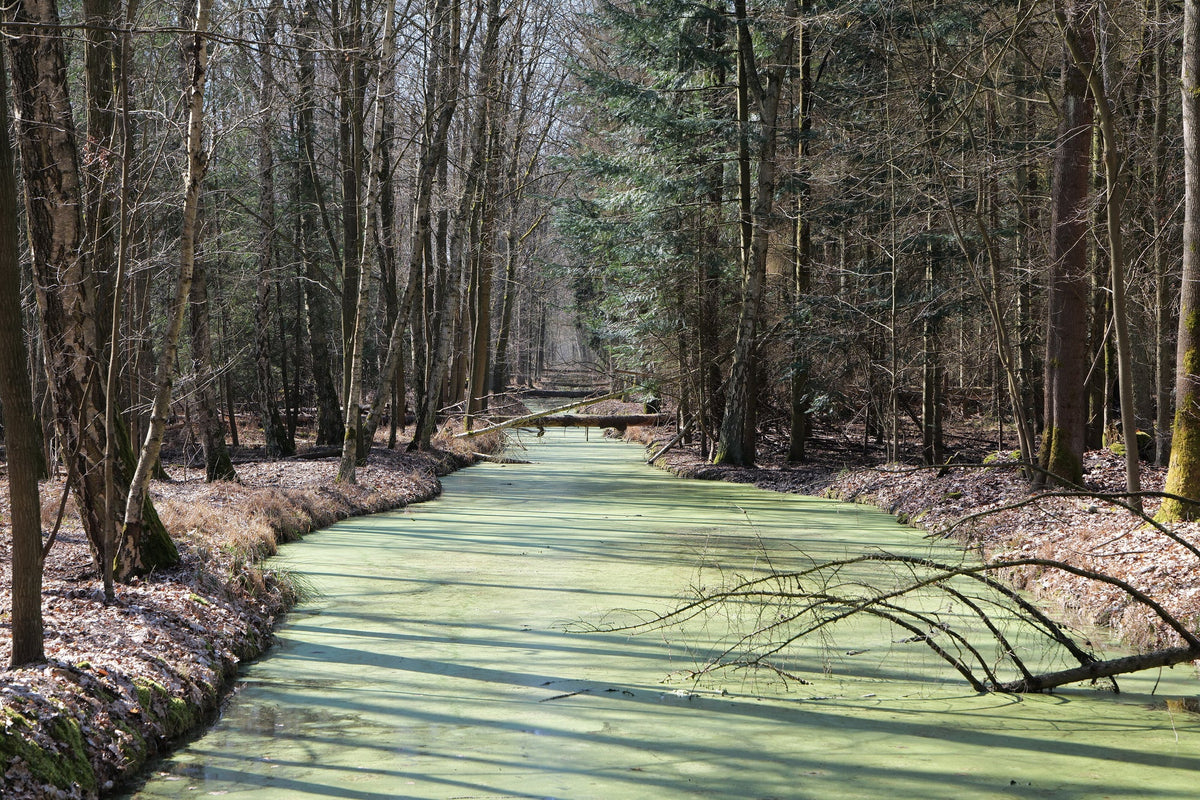
In short: duckweed (Lemna minor) proliferates in calm, nutrient-rich ponds, especially those with high levels of phosphorus and nitrogen, often from the sludge. To get rid of it permanently, remove it mechanically and regularly, keep the water moving, and reduce nutrients at the source. Removal alone is not enough: as long as the water remains rich and still, a few forgotten fronds are enough to cover the surface again.
How to recognize duckweed?
Common duckweed, Lemna minor, is a tiny floating flowering plant. Each individual consists of one or a few fronds, small light green oval blades measuring a few millimeters (often 2 to 5 mm), from which a single root hangs. It forms a continuous mat that can cover the entire surface of a pond, basin, or ditch.
It reproduces mainly vegetatively: one frond produces new fronds that break off. In favorable conditions (calm, warm, and nutrient-rich water), the covered surface can double in a few days. In winter, some of the fronds sink to the bottom and grow back in spring, which explains the return of duckweed every year.
Lemna, azolla or wolffia: do not confuse them
| Criterion | Duckweed (Lemna minor) | Azolla | Wolffia |
|---|---|---|---|
| Nature | Flowering plant | Small floating aquatic fern | Flowering plant, among the smallest known |
| Appearance | Smooth oval fronds of a few mm, one root | Small branched "rosettes" covered with tiny scaly leaves, velvety appearance | Green grains of about 1 mm or less, without roots |
| Color | Light green | Green, often reddish in the sun or in autumn | Bright green, granular texture to the touch |
| Particularity | Very linked to nutrients in the water | Lives in symbiosis with a cyanobacterium that fixes nitrogen from the air | Often mixed with duckweed, harder to eliminate |
Other close species exist, such as the greater duckweed (Spirodela polyrhiza), with larger fronds bearing several roots, or Lemna minuta, a species of American origin that has spread in Europe. The management methods described here apply to all of them.
Why does duckweed proliferate in my pond?
Duckweed is not the cause of the problem, it is a symptom. It indicates eutrophication, that is to say an excessive enrichment of the water with nutrients. Three conditions favor its development:
- Calm water: without current or waves, the fronds remain grouped on the surface. Ponds sheltered from the wind, backwaters, and basins without circulation are the most affected.
- Abundant nutrients, especially phosphorus and nitrogen. Since they float, duckweed draws these elements directly from the surface water, without depending on the soil.
- A layer of sludge: the organic matter accumulated at the bottom (leaves, dead plants, excrement) releases phosphorus and nitrogen into the water, especially when the bottom lacks oxygen. It is a reservoir that feeds the duckweed even after the removal of external inputs.
External inputs also count: runoff from agricultural land or fertilized lawns, fallen leaves, waterfowl (which also transport fronds from one body of water to another), and fish food.
What are the consequences for the pond?
A mat of duckweed seems harmless, but it profoundly changes the functioning of the body of water:
- It creates shade: light no longer penetrates below the surface. Submerged plants, which produce oxygen, wither.
- It drops oxygen levels: dissolved oxygen, that is, the oxygen present in the water and usable by fish and bacteria, is no longer produced under the mat, and the exchanges between the air and the water are reduced. On warm summer nights, wildlife may lack oxygen.
- It feeds the sludge: dead duckweed and submerged plants fall to the bottom and decompose there, which thickens the sludge and restarts the cycle.
How to get rid of duckweed naturally?
No single method is enough. Lasting results come from the combination of a mechanical action, which removes the biomass, and an action on the causes, which prevents its return.
1. Regular mechanical removal
- Identify the wind direction. Duckweed accumulates in the corners on the leeward side: that is where harvesting is most effective.
- Gather it with a fine-mesh skimmer or, on large surfaces, with a floating barrier (a floating line stretched across the pond) that is moved to concentrate the mat towards one bank.
- Remove it completely and move it away from the bank: left at the edge, it returns to the water with the rain and its nutrients too. It makes an excellent addition to compost.
- Start again often. In peak season, one pass per week is a good pace. The goal is to never let the mat reform, because every forgotten frond starts again.
2. Keeping the water moving
Duckweed does not tolerate current and turbulence well. A waterfall, a water jet, a circulation pump, or a surface aerator disturb the mat and make its establishment difficult. In natural ponds, aeration by microbubbles or surface aeration also brings oxygen back to the bottom, which limits the release of phosphorus by the sludge.
3. Reducing nutrients
This is the decisive lever. Limit inputs (leaves, runoff, food), then work on the stock:
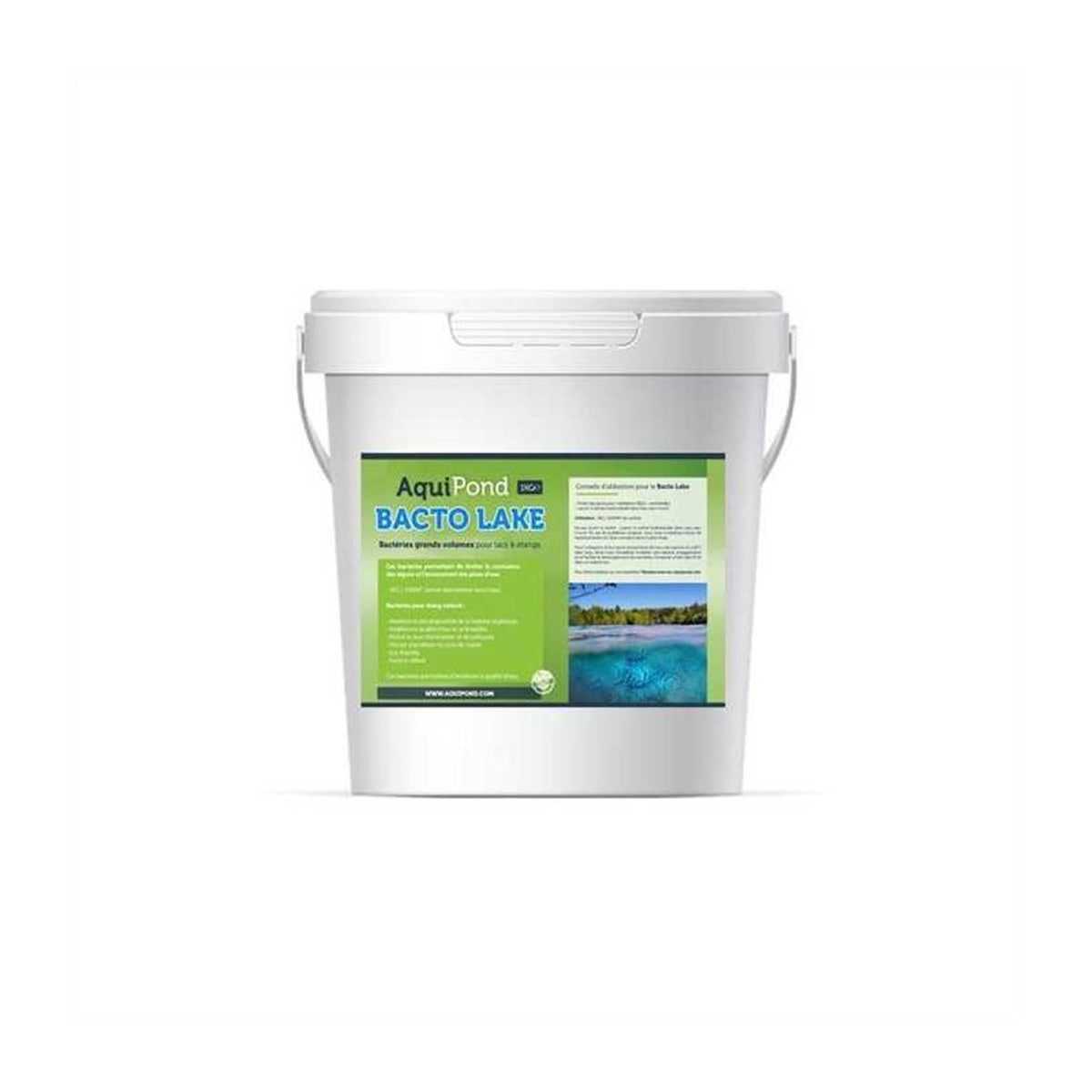
- organic sludge, to be degraded with specialized bacteria such as Bactovase (100 g/m² for maintenance, 150 to 200 g/m² for a heavily sludged pond, twice a year);
- dissolved phosphorus, to be fixed with a sensor such as the SeDox Max by OASE, which acts in the water and in the sludge (about 5 kg per 100 m³);
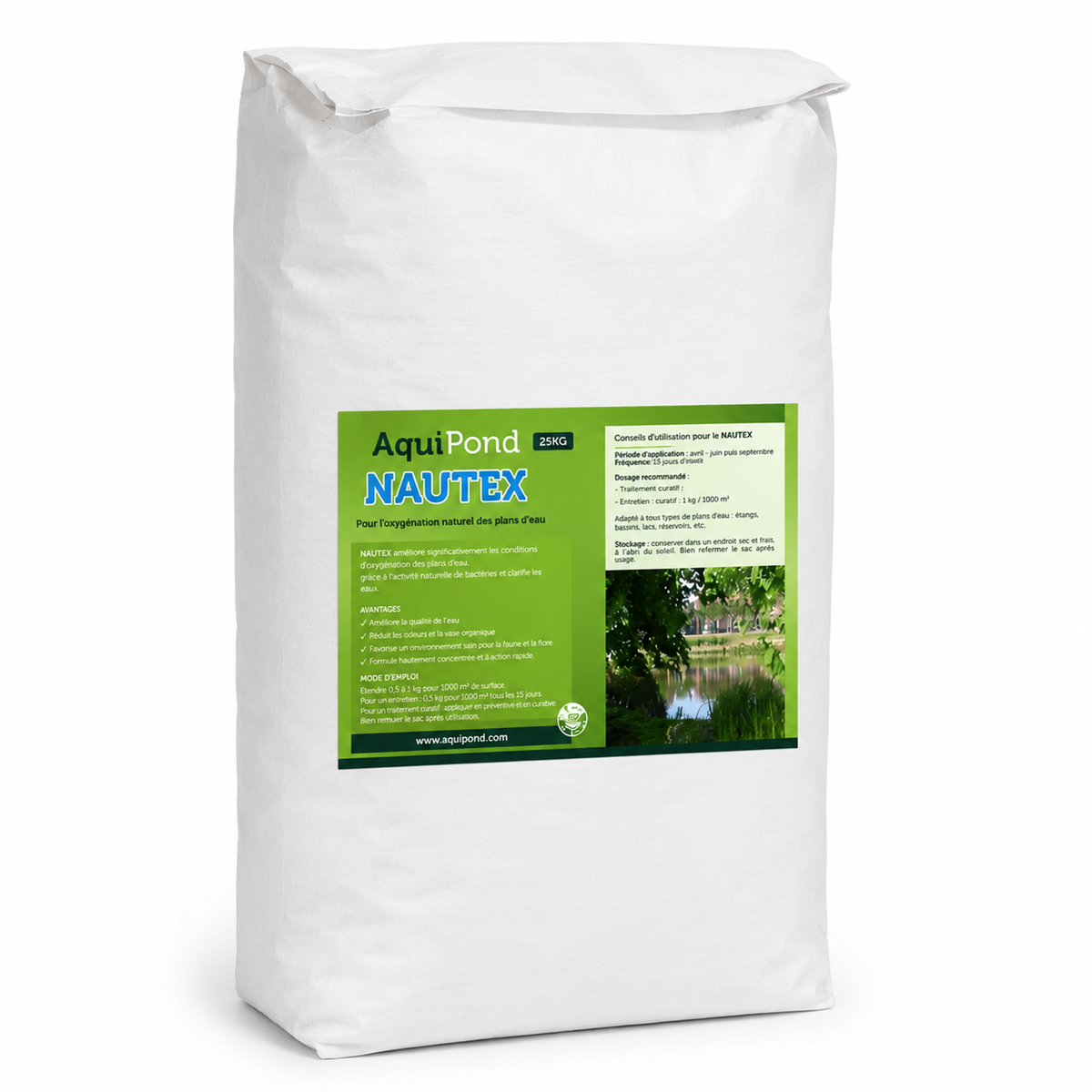
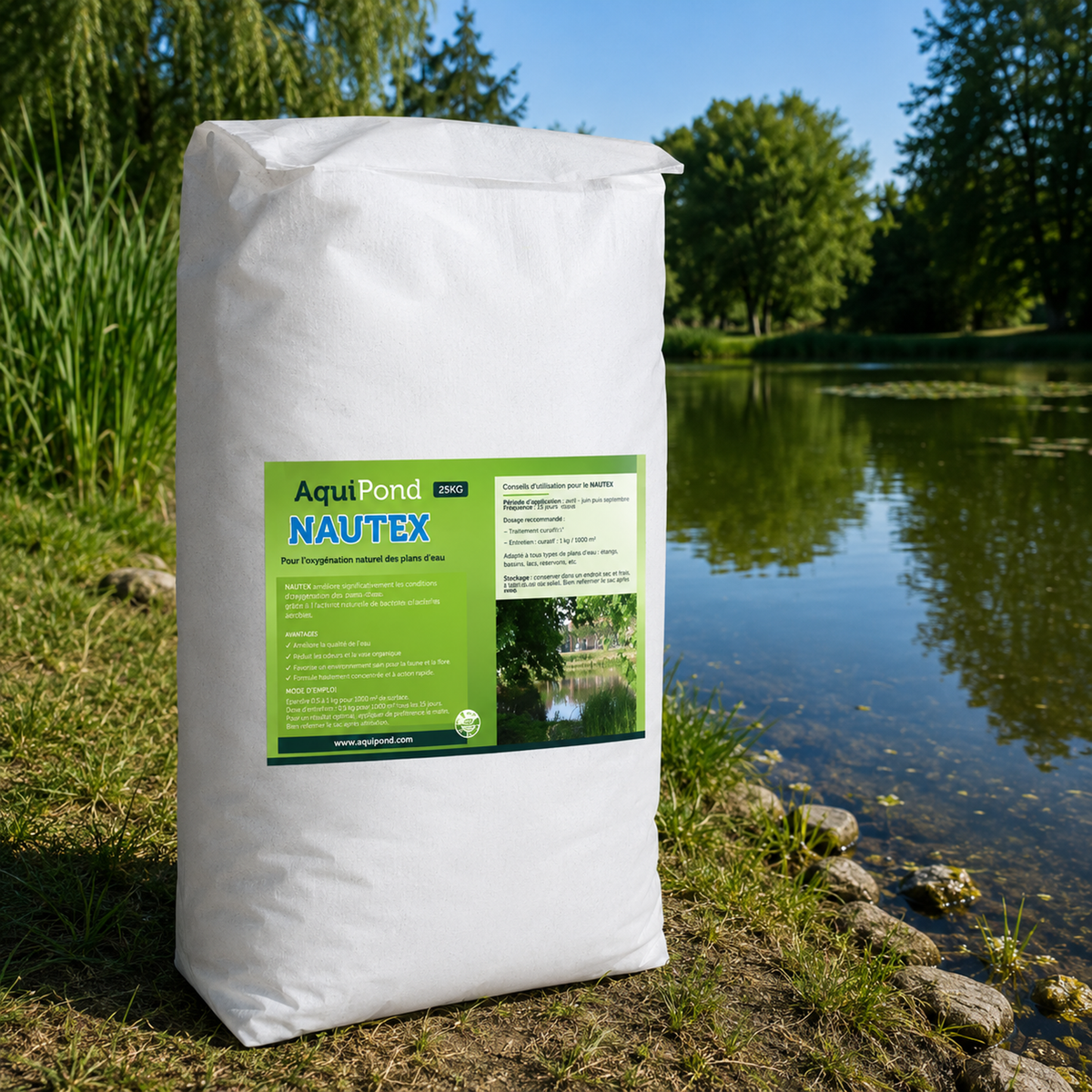
- mineral balance, to be supported with a natural chalk such as Nautex (calcium carbonate, 80 to 100 g/m² for maintenance, 150 to 200 g/m² for correction). It stabilizes the pH by strengthening the KH, the carbonate hardness that buffers the pH, and promotes the mineralization of organic matter.
Submerged and bank aquatic plants also compete with duckweed for nutrients. Replant once the mat is removed, when light returns below the surface.
4. Shading and dye: what you need to know
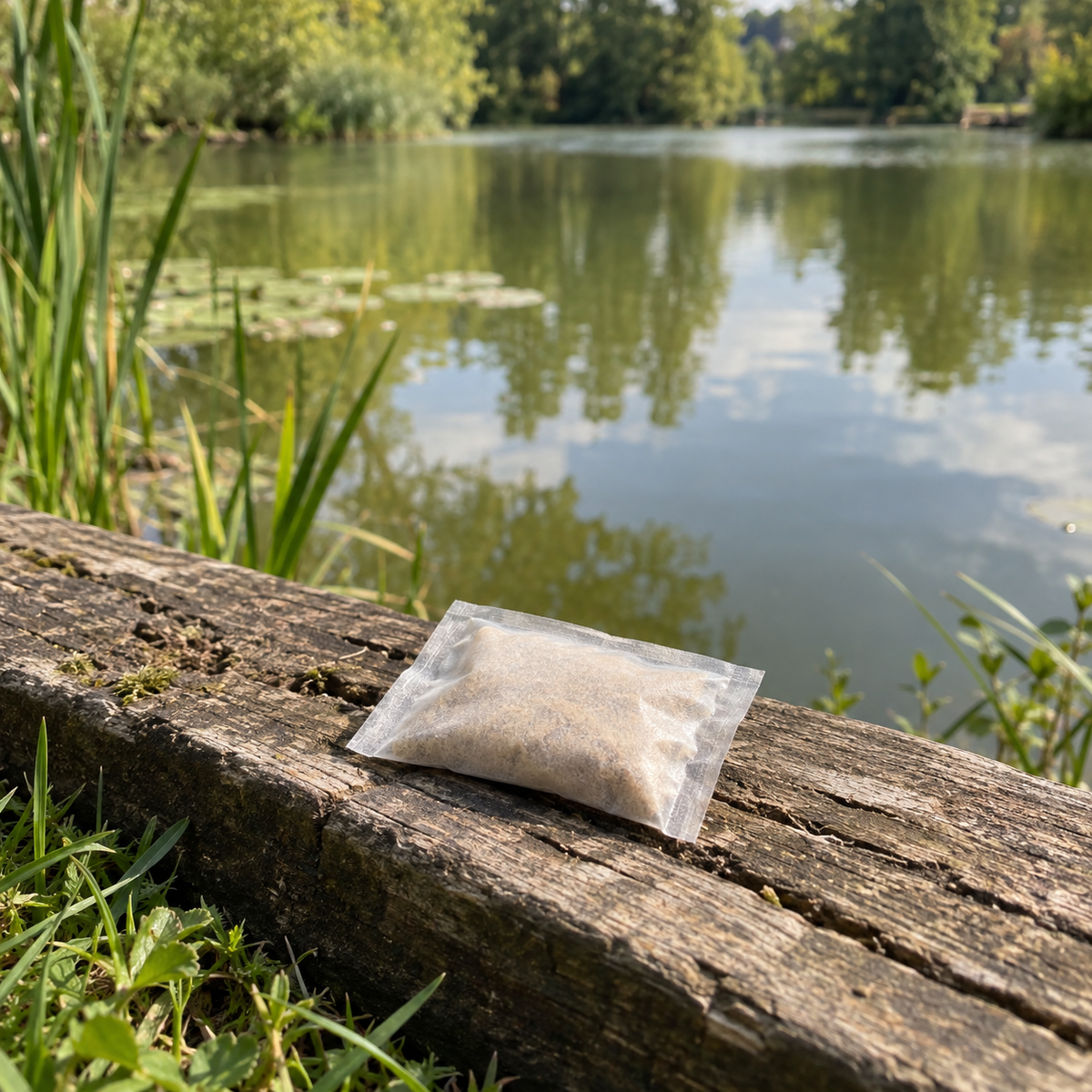
Duckweed floats above the water: a dye does not shade it directly. However, once the surface is cleared, light penetrates abruptly into still rich water, which can trigger an algae bloom. A biological dye such as Blue Lake limits this rebound: it is dosed at 1 bag of 100 g per 1,000 m² against algae, 2 bags for 1,000 m² against submerged plants, every 4 to 6 weeks. Natural shading by trees reduces growth but brings fallen leaves in autumn: it is a compromise.
5. Predators: with caution
Ducks and certain fish consume duckweed, but it is not a reliable solution. Ducks add droppings, therefore nutrients, and transport fronds. Herbivorous fish such as the common carp also eat other plants and their introduction is subject to regulation, or even authorization, depending on the countries and regions. Check with the competent administration (water police or DDT in France, regional administration in Belgium) before any stocking.
Your routine in peak season:
- One pass with the skimmer every week, starting with the leeward corner.
- Harvested duckweed goes to compost, away from the bank.
- The waterfall, pump, or aerator runs continuously.
- No fertilizer on lawns sloping towards the water.
- Fish receive what they eat in a few minutes, no more.
What complete treatment for a pond covered with duckweed?
To act on the three levers at once (minerals, phosphorus, sludge), the Aquipond duckweed treatment pack brings together Nautex, SeDox Max, and Bactovase, with Blue Lake from 600 m². It is about 15% cheaper than buying the products separately. The pack accompanies mechanical removal, it does not replace it.
| Pond surface | Nautex | SeDox Max | Bactovase | Blue Lake |
|---|---|---|---|---|
| Up to 150 m² | 15 kg | 10 kg | 15 kg | - |
| 150 to 300 m² | 30 kg | 15 kg | 30 kg | - |
| 300 to 600 m² | 60 kg | 30 kg | 60 kg | - |
| 600 to 1,000 m² | 100 kg | 50 kg | 100 kg | 1 kg |
| 1,000 to 1,500 m² | 150 kg | 75 kg | 150 kg | 2 kg |
These quantities correspond to a maintenance dose for an average depth of 1 m. For a deeper pond (SeDox Max is dosed by volume) or heavily sludged (corrective dose of Nautex and Bactovase), plan for more. In case of doubt, the free diagnosis helps you adjust.
All our solutions: duckweed treatments.
Mistakes to avoid
- Removing duckweed only once. There are always fronds left; without regular passes, the mat reforms in a few weeks.
- Leaving harvested duckweed on the bank. The rain brings it back into the pond with its nutrients.
- Emptying the pond. The fronds survive in the wet sludge and on the edges, and the refill water brings new nutrients.
- Using a herbicide. The mass of plants killed at once decomposes, consumes oxygen, and enriches the sludge: the next proliferation is guaranteed, with a risk to the fish. The use of these products near water is also strictly regulated.
- Introducing herbivorous fish without authorization. They are regulated in several countries and are not limited to duckweed.
- Treating duckweed without treating the sludge. It is the nutrient reservoir that feeds them year after year.
Frequently asked questions
Is duckweed bad for a pond?
In small quantities, it is part of the ecosystem and feeds certain animals. The problem appears when it covers the entire surface: it blocks light, drops dissolved oxygen, and feeds the sludge as it decomposes.
How to eliminate duckweed naturally?
Combine regular mechanical removal with a skimmer or with a floating barrier, keeping the water moving (waterfall, pump, aerator), and reducing nutrients, especially phosphorus and sludge.
Why does duckweed return every year?
In winter, some of the fronds sink to the bottom and grow back in spring. If the water remains calm and rich in nutrients, especially thanks to the phosphorus stored in the sludge, they find the ideal conditions every year.
What is the difference between duckweed and azolla?
Duckweed is a flowering plant with smooth oval fronds with a root. Azolla is a small floating fern with scaly leaves, with a velvety appearance, which often turns red in the sun or in autumn.
Do common carp eat duckweed?
They can consume it, but they also eat other aquatic plants and their introduction is regulated, or even subject to authorization, depending on the countries and regions. Check with the competent administration before any stocking.
Read also
- Phosphorus in the pond: origins, measurement, and solutions
- Invasive pond plants: how to recognize and get rid of them
- Green water in a pond: causes and lasting solutions
In doubt about your body of water? Duckweed, algae, or submerged plants, each case requires an adapted dosage. Use our free diagnosis or send us a photo.